
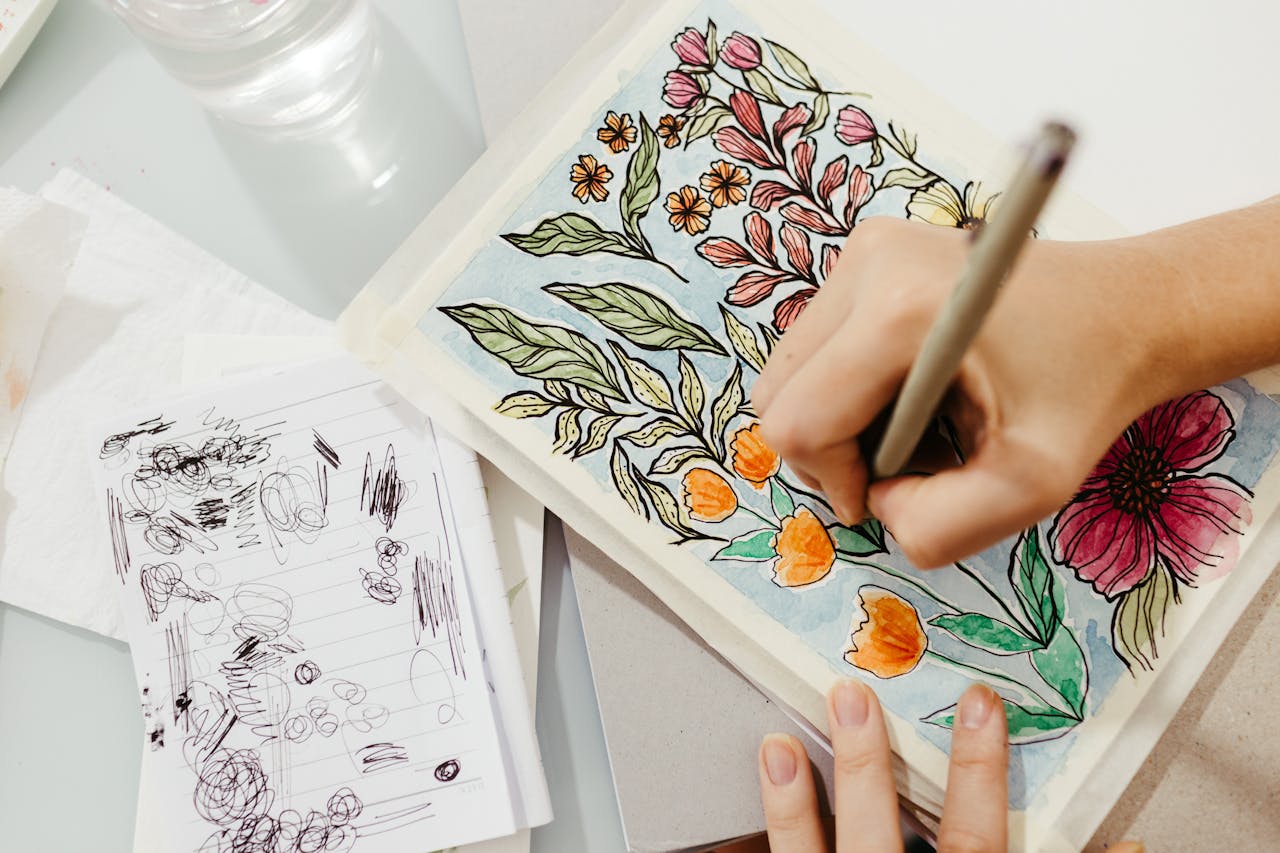
Some days, creativity is still there, but the energy around it is not. The table might be cluttered, your body might feel slow, and the thought of sorting through bins, brushes, thread, and glue can make the whole idea feel bigger than it needs to be.
That does not mean you have to skip making something altogether. A small craft can be quiet, contained, and easy to pause. The best projects for tired days use what is already nearby, ask for only a few decisions, and still give your hands something satisfying to do.
Start With a One-Tray Project
Put everything on a baking sheet, lap desk, or shoebox lid. Scissors, glue stick, paper scraps, a pen, and one small envelope are enough for a card, a bookmark, or a little collage to tuck into a notebook.
On days shaped by pain, early recovery, caregiving, or a virtual outpatient program, a one-tray setup lets you stop without leaving a project spread across the room. The tray can slide under the sofa, onto a dresser, or beside your bed, ready for later.
Make Paper Do Most of the Work
Cutting and arranging paper is forgiving because nothing has to be straight. Tear old wrapping paper into strips, trim magazine colors into loose shapes, or punch circles from envelopes and packaging.
Try one of these when cutting feels easier than planning:
- Glue torn paper onto blank cards and add a single word in pen
- Cover a notebook with washi tape scraps and leftover stickers
- Make gift tags from cereal boxes, ribbon ends, and tiny drawings
- Fold a few origami hearts, stars, or boxes from square paper
- Layer pressed leaves or tissue paper under clear tape for bookmarks
A small kit can help when choosing supplies feels like too much. Better Homes & Gardens highlighted paint-by-number sets and embroidery hoop kits among beginner-friendly crafts, and that kind of format removes the blank-page problem before you sit down.
Choose Repetitive Crafts With a Clear Finish
Threading beads, filling in a coloring page, stitching a running line, or wrapping yarn around a cardboard shape all have the same appeal. You know what to do next, so your hands can keep moving without much planning.
Use what you already have nearby. A handful of mismatched beads can become a zipper pull. Embroidery floss can turn a plain tea towel into something nicer with simple stitches. Air-dry clay can be rolled into beads or pressed into a tiny dish, then left alone until tomorrow.
Creative work often gives your hands and mind somewhere to go, which is why repeated motions feel easier than projects that ask for constant decisions. Keep the goal small enough that finishing still feels likely.
Leave the Project Ready for Tomorrow
Stopping halfway doesn’t mean the craft failed. Put unfinished pieces in a zip bag, leave the needle threaded, cap the glue, and write one quick note about the next step if you’ll forget by morning.
Low-effort making works best when cleanup is part of the setup. Keep a tiny bin, a cloth, and a scrap envelope beside you, then future-you won’t have to face dried paint, lost beads, or sticky scissors.
Choose one project you can start without shopping, clearing a whole table, or learning a new skill. A folded card, a stitched corner, or a colored square still counts as making something.
