
In today’s world, our homes in America are stuck in a rut of “planned” obsolescence. We currently live in an age of flat pack boxes, particle board cores and synthetic surfaces that look good on the internet, but have no chance of surviving even one move.
Our disposable society has created a “fast” furniture, where tables and chairs are treated as clothing style, rather than functioning as an investment in the home. Nonetheless, there is a quiet revolution going on with modern homeowners and designers who are moving back to the past to create their future.
They are rediscovering the incredible value of heirloom quality; which has become harder and harder to find in the primary market, but is abundant within high-end consignment shops laying behind their well-curated walls.
The Anatomy of a Heirloom
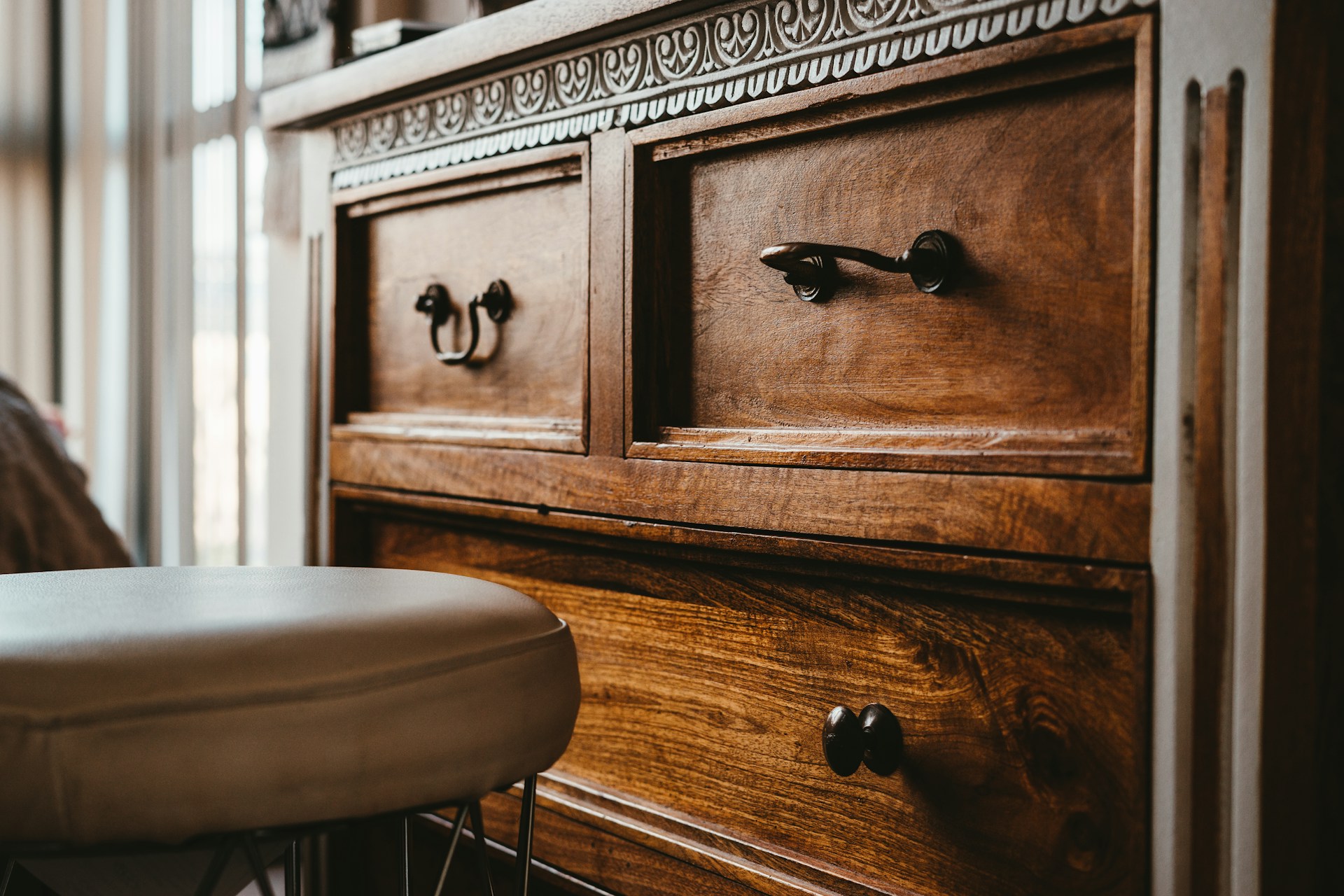
One must first understand what the term “heirloom” signifies in order to comprehend how important heirloom quality is, and that is more than just another marketing term for “old”—it is the sum of the craftsmanship that went into making it. Furnishings were made to last as part of your home from around the turn of the 20th century until the 1940s using hardwoods (like cherry, oak, walnut, and mahogany) rather than fast manufacturing processes (like MDF) used today in the big box stores.
The real value of an heirloom-quality piece of furniture is derived from its joinery. A mass-produced modern dresser might have been assembled with staples, cam locks, or adhesives that will eventually break down under stress. An heirloom-quality dresser will be constructed in one of several ways that are appropriate for the time frame it was made in.
Dovetail joints combine wood into a tight connection at a 90-degree angle to create structural integrity without using hardware. Mortise and tenon construction has been used for thousands of years and provides a solid connection to hold together the legs to the frames of furniture continually over decades of daily use. When passing your hand over a mahogany sideboard you are not just feeling the wood you are also feeling the result of hours of craftsmanship by the artisan who built it to last longer than its original owner will.
Defining Heirloom Quality at The Consignment Gallery
Finding these pieces requires a keen eye, but savvy shoppers know that The Consignment Gallery serves as a vital bridge between the craftsmanship of the past and the homes of the future. A professional consignment showroom acts as a gatekeeper of quality, vetting every item for both its aesthetic appeal and its structural “bones.”
- Vetted Structural Integrity: Unlike online marketplaces, where “as-is” can mean a hidden cracked frame, professional galleries ensure that drawers slide smoothly and joints remain tight.
- The Material Distinction: At a reputable shop, you can find pieces made of solid timber that have a “heft” and presence that modern replicas simply cannot simulate.
- Aesthetic Longevity: Consignment shops tend to attract timeless designs—from Mid-Century Modern icons to 18th-century English reproductions—that remain stylish regardless of fleeting trends.
- A Curated Narrative: Each piece at a gallery has a history. Buying a consigned heirloom allows a homeowner to incorporate a sense of “soul” and “story” into their decor that no brand-new item can provide.
The Sustainability Loop: High-End Consignment as an Ethical Choice
As of 2026, we have reached a point where environmental considerations are at the forefront of our purchasing decisions – not merely as an afterthought. The furniture industry is one of the most prominent contributors to pollution globally, with millions of tons of wood waste winding up in U.S. landfills year after year. Fast furniture, in particular, leads to even more pollution through the use of non-recyclable and non-biodegradable composite materials, heavy with formaldehyde-based adhesives, making it an even bigger environmental threat than traditional forms of furniture.
Shopping at consignment stores promotes the ‘circular home’ economy by allowing us to purchase pre-loved heirlooms to divert quality materials from being deposited into landfills while also decreasing the demand for newly harvested timber. Additionally, purchasing heirloom (second hand) pieces also results in not only reducing the carbon footprint associated with international shipping, but also decreasing the amount of energy used to manufacture modern “disposable” goods.
Investing in heirlooms represents the epitome of environmentally responsible consumerism; it is the philosophy of “buying once and buy well.” When an item lasts for 80 years, rather than being purchased and discarded after only 8 years, the environmental dividend gained will be substantial.
The Economics of Quality: Cost-Effectiveness vs. Cheapness
When compared to actual worth, a low price has a great deal of disparity. Take for instance, dining tables, such as those that come pre-assembled which tend to be much cheaper today than similar items priced higher. But within five to seven years, you have spent much more on the table due to yearly ownership costs. You will probably end up discarding the table due to peeling veneer, wobbly legs, or breaking altogether.
On the other hand, if you can locate an heirloom-quality table, the value of that piece will remain constant over time.
The same is true for high-end consignment shops in your area, where you will discover many well-known and respected manufacturers (such as Baker, Henredon, and Stickley) offering their products for less than half of their original retail cost. Originally, these items were sold from five-figure price tags in exclusive retail locations. By purchasing from a consignment shop, you are benefiting from this “luxury loophole.” You’ll acquire an item that is likely to hold its value or even appreciate while its mass-produced cousins depreciate to nothing as soon as they leave the shipping dock. Therefore, purchasing from a consignment store should be viewed not only as a design choice but as an investment strategy for today’s homeowner.
Common Questions on Shopping for Consigned Heirlooms
How do I distinguish between a “vintage” piece and a true “heirloom” quality item? “Vintage” refers only to age, whereas “heirloom” refers to construction. Look for signs of hand-craftsmanship: solid wood drawer bottoms rather than plywood, hand-sanded finishes, and weight. If a piece is exceptionally heavy for its size, it is usually a sign of solid, high-quality timber.
Is it worth refinishing or reupholstering a consigned piece?
Absolutely. If the “bones” of the piece are solid hardwood, refinishing can bring it back to its original glory or allow you to modernize the look with a contemporary stain. High-end frames are built to be reupholstered multiple times, a process that is often cheaper than buying a new, low-quality sofa.
What are the specific furniture brands that hold their value best in the consignment market?
Brands that utilized traditional American or European craftsmanship standards—such as Ethan Allen (vintage), Maitland-Smith, or Kindel—are perennial favorites. These manufacturers are known for their uncompromising material standards.
Responsible Use / Compliance
Buyers need to be realistic when searching for consignment heirloom (or vintage) furniture due to the nature of the pieces being sold – usually they exhibit what is referred to as “patina,” which can include natural aging, fading (slight changes in hue), and other imperfections that serve to establish the history of an item. As many heirloom items were made with solid wood, they will likely contract/expand when exposed to varying levels of humidity, so keeping a stable indoor climate will help maintain the integrity of your pieces over time. Make sure you carefully measure your desired location before you purchase any heirloom pieces, as many are larger than we now build with “new world” design standards (in terms of proportions).
Conclusion
Living in this age of disposability, there is great stability in items that are considered permanent. Heirloom-grade furnishings can reassure us by exhibiting evidence of days gone by where items were crafted to endure and provide lasting strength and dignity to present-day residences. By purchasing your goods at reputable consignment stores, you are going beyond simply decorating a room – you are curating your own family legacy! By actively pursuing quality over convenience, sustainability over waste, and uniqueness over the mundane, you will create a legacy that transcends the mere occupation of a room; you will build a home with an anchoring presence through heirlooms!
