
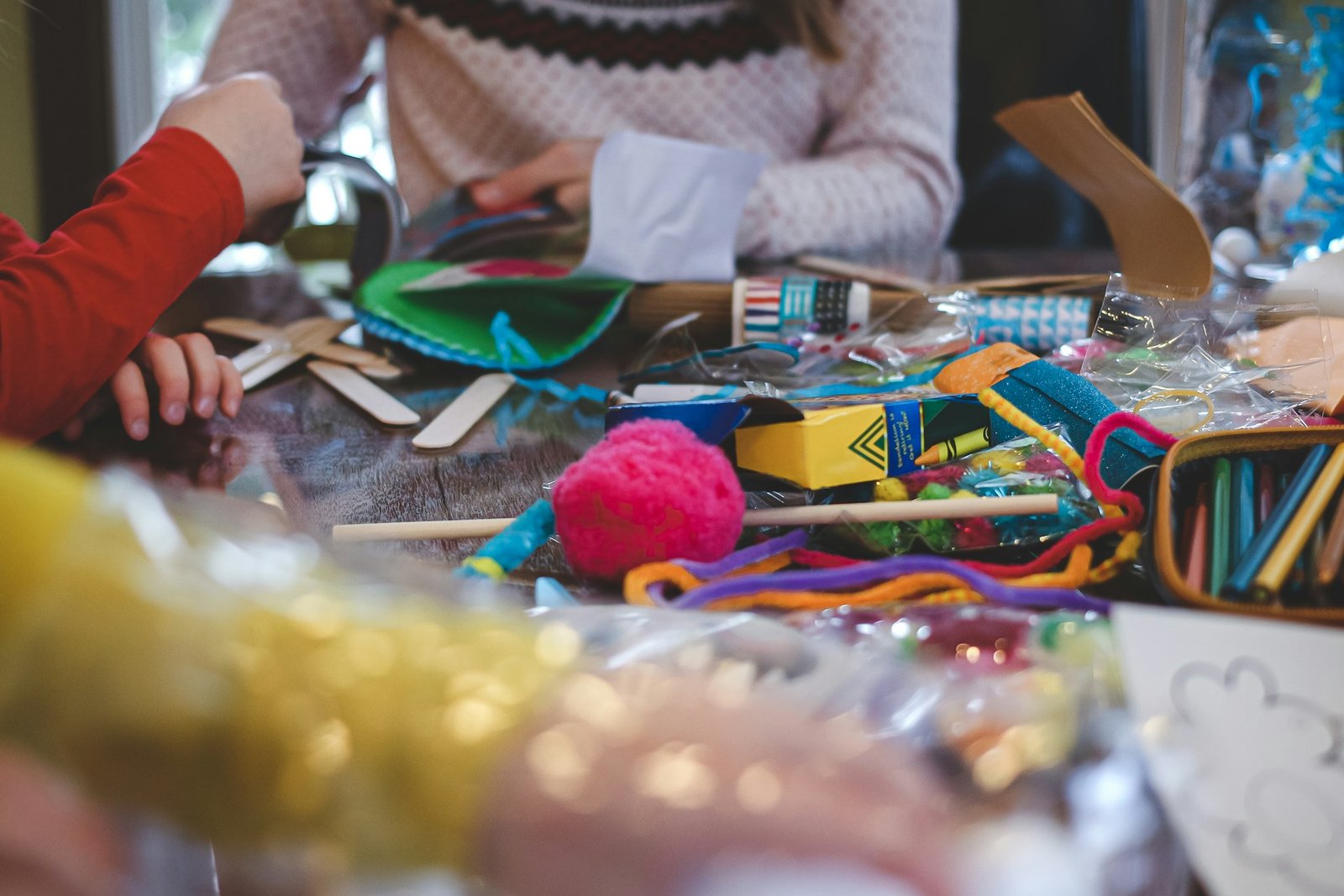
Crafting with children can start with one sheet of paper and somehow end with glitter in the hallway, glue on the chair and someone crying because the blue pen has vanished. The activity may be lovely, but the set-up often decides whether you’ll want to do it again.
A few home tweaks can make children’s craft time feel less like a controlled disaster. The aim is not to create a perfect art studio. It’s to make materials easier to reach, mess easier to contain and finished creations easier to enjoy before they quietly disappear into recycling.
Give supplies one obvious home
Children craft more independently when they can see what’s available without emptying every drawer. A shallow box for paper, a jar for pencils and a lidded tub for glue and scissors can make the whole process less scattered.
Creative projects become easier to say yes to when materials are grouped by use rather than hidden all over the house. The idea behind craft packs reaching families who need materials also shows how much access matters when children want to make things.
Protect the surface before the enthusiasm starts
The table doesn’t need to be precious, but it does need a plan. Keep an old wipe-clean cloth, baking tray or roll of brown paper nearby, so the first five minutes aren’t spent looking for protection while children have already opened the paint. A clear boundary also helps children understand where the messy part of the activity begins and ends.
Good surfaces also depend on light and airflow. Sometimes uPVC Windows make a craft space easier to live with when sticky hands, drying paper and changing weather are all part of the same afternoon, especially if the room doubles as a kitchen, playroom or dining area.
Create a drying place that isn’t the table
Wet paintings left on the eating surface turn dinner into a negotiation. String, pegs, a cheap rack or a dedicated windowsill can stop finished work from spreading across the whole room.
It also helps children see their work as something worth looking after. Even a small display line can make a five-minute painting feel more valued than a pile of curled paper.
Keep the mess kit separate
A craft box should not need a full cleaning cupboard, but a mini clean-up kit saves time. Keep these together:
- old flannel for painty fingers
- small dustpan for paper scraps
- cloth for glue spills
- reused tub for pencil sharpenings
- apron or oversized shirt
The point is to make tidying part of the activity rather than a punishment after it.
Make the space flexible
Most homes don’t have room for a dedicated craft room, so flexibility matters. A trolley, a shelf, a cupboard door organiser or a basket under the table can work better than a beautiful set-up nobody uses. Even compact rooms can borrow from craft corners that use storage and wall space well, then scale the idea down for real family life. The best craft set-up is the one that lets children begin without asking for six things and lets adults clear the room before bedtime without resenting the whole idea.
