
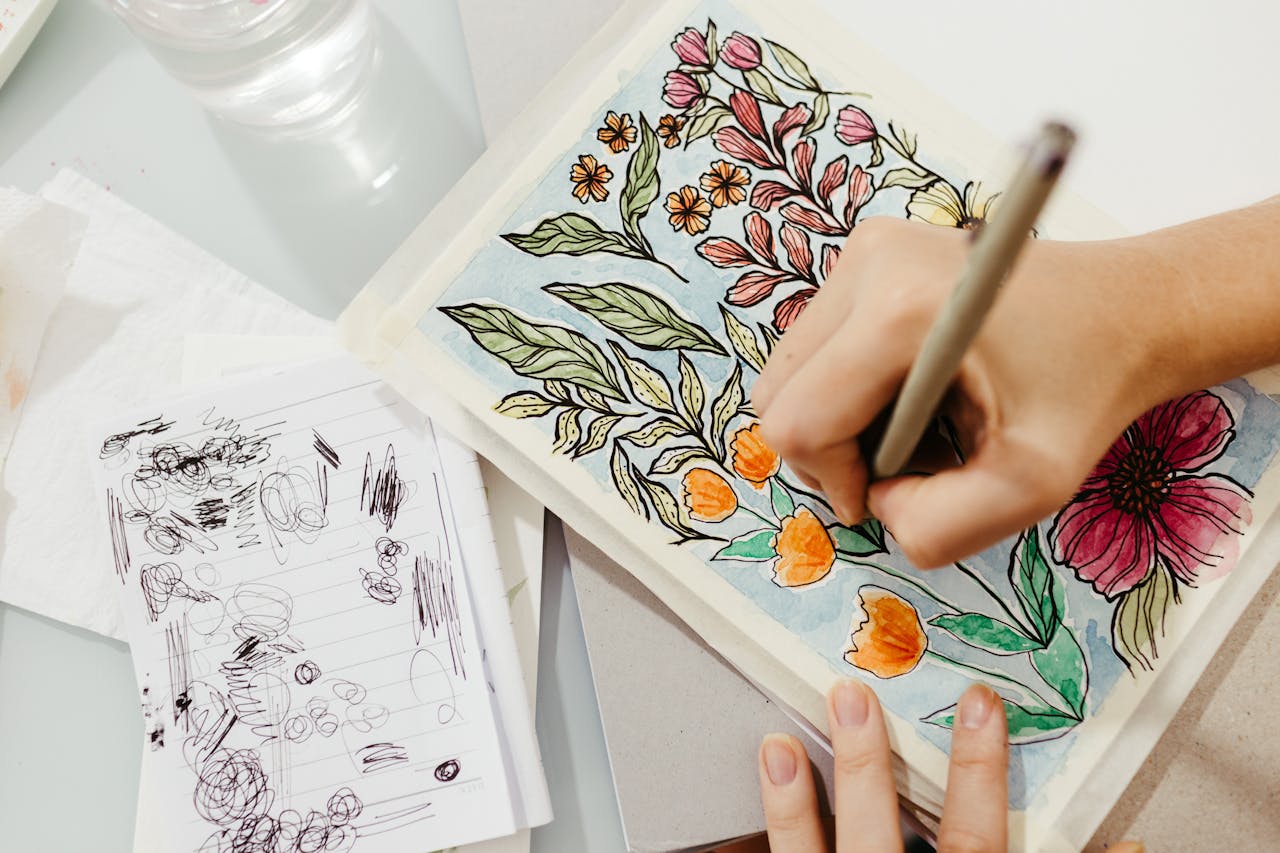
Recovering from surgery often means spending more quiet time at home than we are used to. While rest is essential, there are only so many hours we can spend watching television, scrolling through our phones, or staring at the ceiling, wondering what day it is.
That is where comfort crafts come in. Simple creative activities can fill slow afternoons, distract us from boredom, and give us the satisfaction of making something with our own hands. The best part? We do not need to be the next Picasso or Martha Stewart. The goal is not perfection. It is simple to relax, experiment, and have a little fun while our bodies recover.
Before starting, we should always follow our surgeon’s instructions and choose activities that suit our mobility and energy levels.
Adult Coloring Books for Easy Creativity
Remember when we colored without worrying whether we were any good at it? Adult coloring books let us rediscover that simple pleasure.
All we need is a coloring book and some pencils, markers, or crayons. There are designs for practically every personality, from botanical gardens and animals to geometric patterns and dreamy landscapes.
Who says the sky needs to be blue? Make it purple. Give the trees pink leaves. Turn an ordinary cat into something Andy Warhol might have dreamed up.
If we are recovering in bed, a lap desk can provide a stable surface. We should also watch for signs of hand fatigue and take breaks as needed.
Paint by Numbers: Channel Your Inner Artist
Want to create something beautiful without staring dramatically at a blank canvas like a tortured Renaissance artist?
Paint by numbers might be perfect.
We simply match numbered sections of a canvas with corresponding paints. Projects range from cheerful flowers to landscapes and recreations inspired by famous artworks. Smaller canvases are particularly practical during recovery because they require less reaching and are easier to move.
Just remember that wet paint and fresh bed sheets are not always the best combination. A sturdy tray can prevent an accidental modern-art masterpiece on the duvet.
Diamond Painting for Extra Sparkle
Diamond painting combines elements of mosaics, cross-stitch, and paint-by-numbers. Tiny resin pieces are placed onto a coded adhesive canvas, gradually creating a sparkling picture.
The repetitive process can be wonderfully absorbing, and there is no pressure to finish quickly. Small projects such as bookmarks, coasters, and decorative cards work particularly well when space is limited.
Keep those tiny pieces in secure containers, though. A rhinestone explosion across the bedroom floor is beautiful in theory, but considerably less charming when we cannot bend down to retrieve them.
Knitting, Crochet, and Embroidery
If we already knit or crochet, recovery can be an opportunity to rescue that unfinished project hiding in the cupboard. Scarves, blankets, hats, and granny squares can all be completed gradually while we listen to music, podcasts, or audiobooks.
Embroidery and cross-stitch are equally satisfying for anyone who enjoys detailed work. Beginner kits usually include everything needed, making it easy to stitch flowers, animals, quotes, or quirky designs.
Dropped a stitch? Made something slightly wonky? That is a handmade charm. We are creating for enjoyment, not competing for a museum exhibition.
Origami and Paper Crafts
What can we make from one square of paper? Quite a lot, actually.
Origami transforms simple paper into cranes, flowers, butterflies, boxes, stars, and elaborate animals. Beginners can start with easy designs before experimenting with more complicated creations.
Card making and collage are other possibilities. Old magazines, photographs, stickers, and patterned paper can be turned into greeting cards, bookmarks, or colorful artwork.
Paper crafts are wonderfully flexible. We can create something in five minutes or disappear into a creative rabbit hole for an entire afternoon.
Journaling and Scrapbooking Your Recovery
Not every creative project needs to hang on a wall. Journaling can become a craft of its own when we add photographs, drawings, stickers, pressed flowers, and decorative paper.
We might record small recovery milestones, funny moments, or things we want to do when we feel better. One entry might say, “Walked farther today.” Another might simply say, “Watched three movies and ate excellent snacks.”
Both count.
Over time, these pages can become a personal snapshot of an unusual chapter in our lives.
Flower Pressing and Jewelry Making
Flower pressing is a gentle activity requiring little physical effort. Once dried, pressed flowers can be used to decorate bookmarks, cards, journals, or framed artwork.
Jewelry making offers another manageable option. Simple beaded bracelets and necklaces can be assembled on a small tray or lap desk. Choose elegant neutrals, bright beads, or quirky charms. There is no fashion police inspecting our recovery crafts.
Just keep beads safely organized. Crawling under furniture to retrieve a runaway bead probably was not included in our surgeon’s rehabilitation plan.
Choosing Crafts for Your Healing Period
The best recovery craft is not necessarily the most impressive. It is whatever we can comfortably enjoy without interfering with healing.
Recovery timelines vary considerably depending on the procedure. Even within specific surgeries, the healing period may involve different stages of swelling, activity restrictions, and gradual returns to everyday routines. That makes it sensible to match our crafts to how we feel at each stage rather than expecting the same energy every day.
Early on, simple activities such as coloring or journaling may be enough. As our energy returns, we can experiment with embroidery, painting, jewelry-making, or model-building.
Keeping supplies within easy reach also helps. A bedside basket, rolling cart, or lap desk means fewer unnecessary trips across the room.
Making Surgical Recovery More Creative
Surgical recovery asks us to slow down, sometimes much more than we would choose. Comfort crafts cannot make healing happen overnight, but they can make quiet hours feel more colorful and enjoyable.
Maybe coloring helps us unwind. Perhaps embroidery becomes our new obsession. We might discover that folding origami cranes is strangely addictive.
There is no pressure to turn recovery into extraordinary productivity. We do not need to emerge with 12 knitted scarves and enough handmade jewelry to open a boutique.
Pick up a pencil. Fold some paper. Add three stitches to an embroidery project. Paint one tiny section of a canvas.
The finished project does not have to be perfect. If creating something made a slow afternoon more enjoyable, helped us relax, or simply gave us something to smile about, then it has already done its job.
