
Craft projects often go wrong in boring places. The paper slips, the scissors chew the ribbon, the glue clogs, the stitch is hard to see and the table disappears under scraps before the enjoyable part has properly begun. It’s rarely the main idea that causes the problem. More often, it’s the blunt blade, the missing ruler, the tangled thread or the tiny mess that keeps getting in the way.
Better tools don’t have to mean buying a specialist kit for every hobby. A few everyday items, kept close and in good condition, can make creative time feel less fiddly and far more enjoyable. Sharp scissors, decent lighting, a clear cutting surface, spare blades, tape that actually sticks and a small pot for loose bits can save a project from becoming annoying. The easier it is to start, tidy and find what you need, the more likely you are to enjoy making something.
Start With Seeing the Detail
Close work asks a lot of your eyes. Threading needles, lining up paper edges, reading tiny pattern marks or checking paint along a border can become frustrating if the light is poor or your glasses are no longer right for the task. A daylight lamp, a clean work surface and a pair of glasses that suit close work can make the whole hobby feel less tiring. If close work has started to blur, reglaze glasses can keep a favourite pair in use while making embroidery, model-making, card design or sewing easier to focus on.
Keep Cutting and Sticking Tools Separate
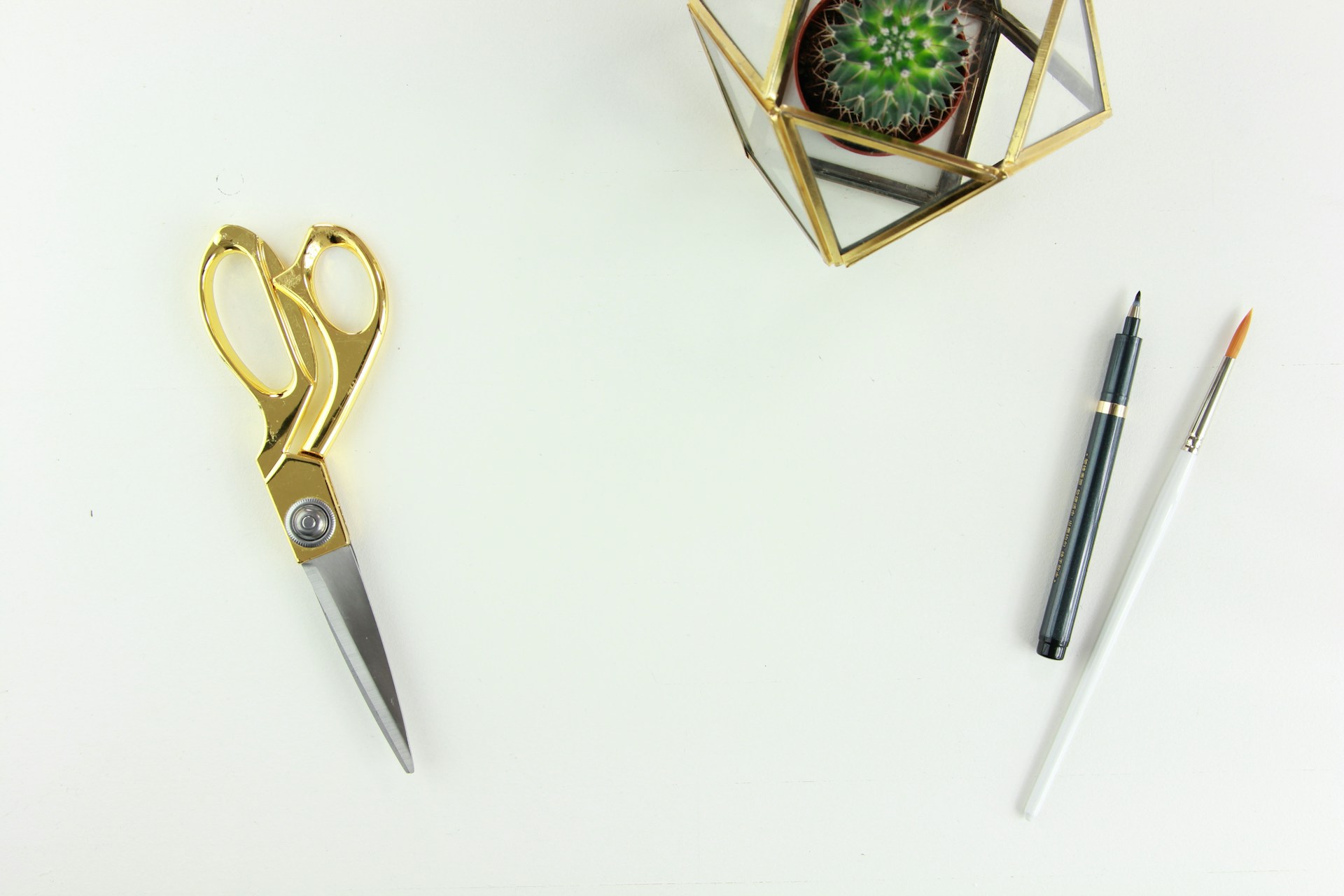
Household scissors are usually asked to do too much. They open parcels, trim tape, cut cardboard, snip fabric and then disappoint everyone when they meet ribbon or thread. Keep one pair for fabric, one for paper and one old pair for rough jobs. Add a small craft knife, cutting mat and ruler if your projects involve straight edges, because clean cutting makes almost every project easier to finish neatly.
Glue needs the same kind of order. Glue sticks, tape runners, fabric glue and tacky glue each behave differently, and grabbing whatever is nearest can lead to wrinkled paper or corners that lift overnight. A small tray of low-cost craft basics can cover everyday needs without turning your cupboard into a shop.
Keep Small Helpers Within Reach
Some tools are not exciting, but they make the difference between a project you finish and one that gets pushed aside. Keep these close if you craft often:
- bulldog clips for holding layers together
- tweezers for tiny paper or bead work
- a lint roller for thread and glitter
- masking tape for temporary marks
- a tray for beads, buttons or screws
- a notebook for measurements and colour choices
Make the Setup Easy to Repeat
Creative time is easier to protect when starting doesn’t take half an hour. A box, trolley or drawer with the basics already together means you can pick up a project between chores or after work. Keep the most-used tools separate from materials for one-off projects, because a mixed drawer turns the first ten minutes into a hunt instead of a start.
The point of a hobby is easier to remember when making things supports mental wellbeing as well as the finished object. Keep the tools simple, visible and ready, and the making itself gets more room. A project is much easier to return to when the first step is picking it up, not clearing a table and hunting for scissors.
