
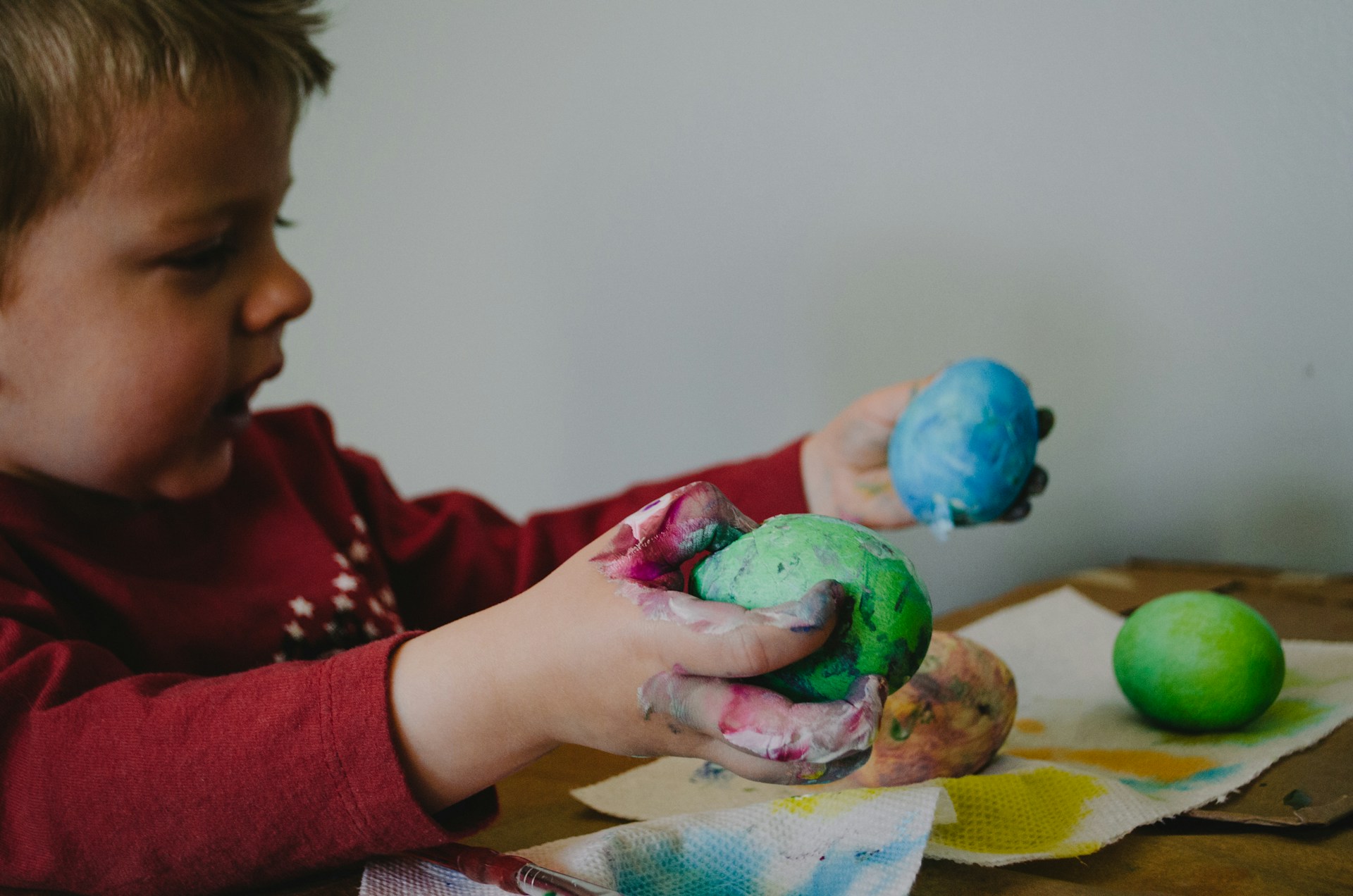
You set out oats and spoons, then find flakes across the kitchen floor and a toddler licking the spoon. Messy play can feel like extra work when the laundry basket is full, but the best kind often looks ordinary: pouring, squeezing, rubbing, dropping, carrying and seeing what happens next.
At home, it works best when the mess has a place and a purpose. A washing-up bowl on a towel, a baking tray on the table or a muddy corner by the back door gives your child room to explore without taking over the whole house.
Use Mess to Rehearse Real Routines
A bowl of warm water, a flannel and a plastic doll can turn “wash your face” into a game. Try the same idea with brushing toy teeth, washing cups or packing a pretend nursery bag.
Toilet learning fits here too. A toy bathroom with spare pants, a little towel, hand washing and a pretend flush lets your child practise the steps. Some families ask for potty training help when accidents have turned each trip to the loo into a battle. A potty training consultation is usually about the adult plan, not extra pressure on the child.
Start With Food Cupboard Textures
Raid the cupboard before buying anything. Dry pasta, oats, lentils, flour, cereal hoops and rice all feel different in small hands. Add cups, spoons and a muffin tin, then let your child scoop, fill, tip and compare.
Pouring station: Give them a small jug and two bowls to learn how far to tilt before it spills.
Squashing tray: Banana, cooled potato or avocado lets them press, mash and notice how soft food changes shape.
Sorting bowl: Pasta shells, wooden pegs and large buttons turn tidying into matching, counting and choosing.
For a child who loves squeezing and poking, squishy sensory play gives their hands plenty to notice while you name textures like sticky, smooth, cold, gritty and slippery.
Take the Mess Outside
Rainwater, soil, leaves and sticks are better than most toy sets because they never behave exactly the same way twice. Give your child an old pan, a wooden spoon and a few stones, then let them make soup, cement, pies or potions. They’re testing weight, texture, volume and cause and effect.
Old clothes help everyone relax. A waterproof all-in-one, wellies and a towel by the door make mud and outdoor play easier to say yes to, especially after rain. Keep boundaries simple: mud stays in this patch, sticks point down, hands get washed before snacks.
Make Cleaning Up Part of the Play
A child who has spent twenty minutes tipping rice across a tray can help brush it into a dustpan. They won’t do it neatly, and you may need to finish the job, but the clean-up teaches care and order. “Put the spoons in this pot” works better than expecting them to reset the whole kitchen.
Keep a small messy-play kit where you can grab it: an old sheet, washable cloths, a tray, a bowl and a few spoons. The easier it is to set up and pack away, the more likely you’ll offer it on an average Tuesday.
Choose one idea that matches the day you’re having. Ten minutes with oats, water or mud is enough for real skills, with the clean-up still within reach.
