
Basic craft tools you need but might not have
Let’s talk regrets. Not the “I wasted money on something I never used.” That one stings, for sure. But the worse one is realizing you spent years doing something the hard way when a thirty dollar tool would have changed your life.
These are the purchases that are easy to keep putting off because they seem unnecessary, or boring, or like something you could just work around. And then you finally get one and immediately think: where have you been my whole life?
Maybe you already own all of these. But if you’re still in the “I’ll just use scissors” era of your crafting life, this one’s for you.
A paper trimmer
Not glamorous. Possibly the single most useful thing on this list.
The standard scissors-and-ruler approach to cutting scrapbook paper has a fundamental problem: keeping scissors on a perfectly straight line across a full sheet of cardstock is genuinely hard, and even small deviations compound once you start layering. You measure carefully, cut slowly, and still end up with a line that wandered just enough to be noticeable once everything is glued down. And once it’s glued, that’s all you see.
A paper trimmer has a fixed cutting track and built-in measurement guides. You line it up, you cut, it’s straight — every time, not just when you’re being especially careful. Twenty cuts in a row produces twenty pieces that actually match each other, which matters a lot more than it sounds once you’re assembling a multi-layered layout and everything needs to work together visually.
Batch projects change completely too. Making a set of cards, cutting a stack of photo mats, anything that involves repeating the same cut multiple times — with scissors, every piece is its own small gamble. With a trimmer, you set your measurement once and just go. It also handles vellum, photos, journaling cards, and printed inserts, so it’s not a one-trick tool. You grab it constantly without thinking about it.
Size is the main variable when choosing. Card makers can usually get away with a smaller trimmer, but scrapbookers are generally better served by something that handles a full 12×12 sheet. Beyond that, blade style (rotary versus guillotine), scoring attachments, and the quality of the measurement grid are worth comparing depending on what you make most. You can take a look at options here.
A bone folder
Small, cheap, and very easy to keep skipping over.
If you make cards, fold inserts, or do anything involving a crisp crease, a bone folder is what actually gets you there. Folding paper by hand produces a fold. A bone folder produces a crease — sharp, flat, the kind that doesn’t slowly spring back open or leave a rough edge. You run it along a scored line with light pressure and the result looks intentional in a way that hand-folding just doesn’t.
It’s one of those tools that costs next to nothing and immediately makes finished work look more polished. Hard to justify putting it off.
A proper adhesive runner
The adhesive situation in a lot of craft spaces is, charitably, a patchwork. Double-sided tape cut into strips. Regular tape as backup. A glue stick from the back of a drawer. Things that are technically fine and slightly wrong in practice — adhesives that bubble, don’t hold at the edges, or leave a visible line under thin paper.
An adhesive runner made for paper crafting is just consistently right. It goes down flat, holds clean, and doesn’t show through. More importantly, you stop thinking about it — and that’s the actual goal with any tool. The mental energy should go toward choosing papers and arranging layouts, not toward whether the adhesive is going to behave this time.
A paper piercer and foam mat
Not something that’s obviously missing from a craft space until suddenly it is.
Any stitching on cards or layouts — or even just clean holes for brads and eyelets — done without a piercer tends to be a frustrating process involving thumbtacks, bending needles, and holes that come out rougher than you wanted. A paper piercer is a fine sharp point on a handle, used against a foam mat so the tip has somewhere to go. The holes come out clean, consistent, and where you actually intended them. It’s inexpensive and removes a specific annoyance so thoroughly that you forget it was ever an issue.
A dedicated ink blending tool
Easy to skip because it seems improvable — and you can use a finger in a pinch. A finger is just not very good at it.
Ink blending requires even, controlled pressure, and fingers are squishy and imprecise and tend to spread ink onto things that weren’t supposed to get inked. A foam blending tool with a flat pad and a handle gives you actual control — you can work in circles, build color gradually, and keep things where they belong. The results look deliberate instead of slightly accidental, and the tools are cheap enough that there’s not a strong argument for waiting.
A self-healing cutting mat
Sounds a little magical, and maybe it is, but not in the woo-woo kind of way. The least exciting purchase on this list and also one that gets used constantly.
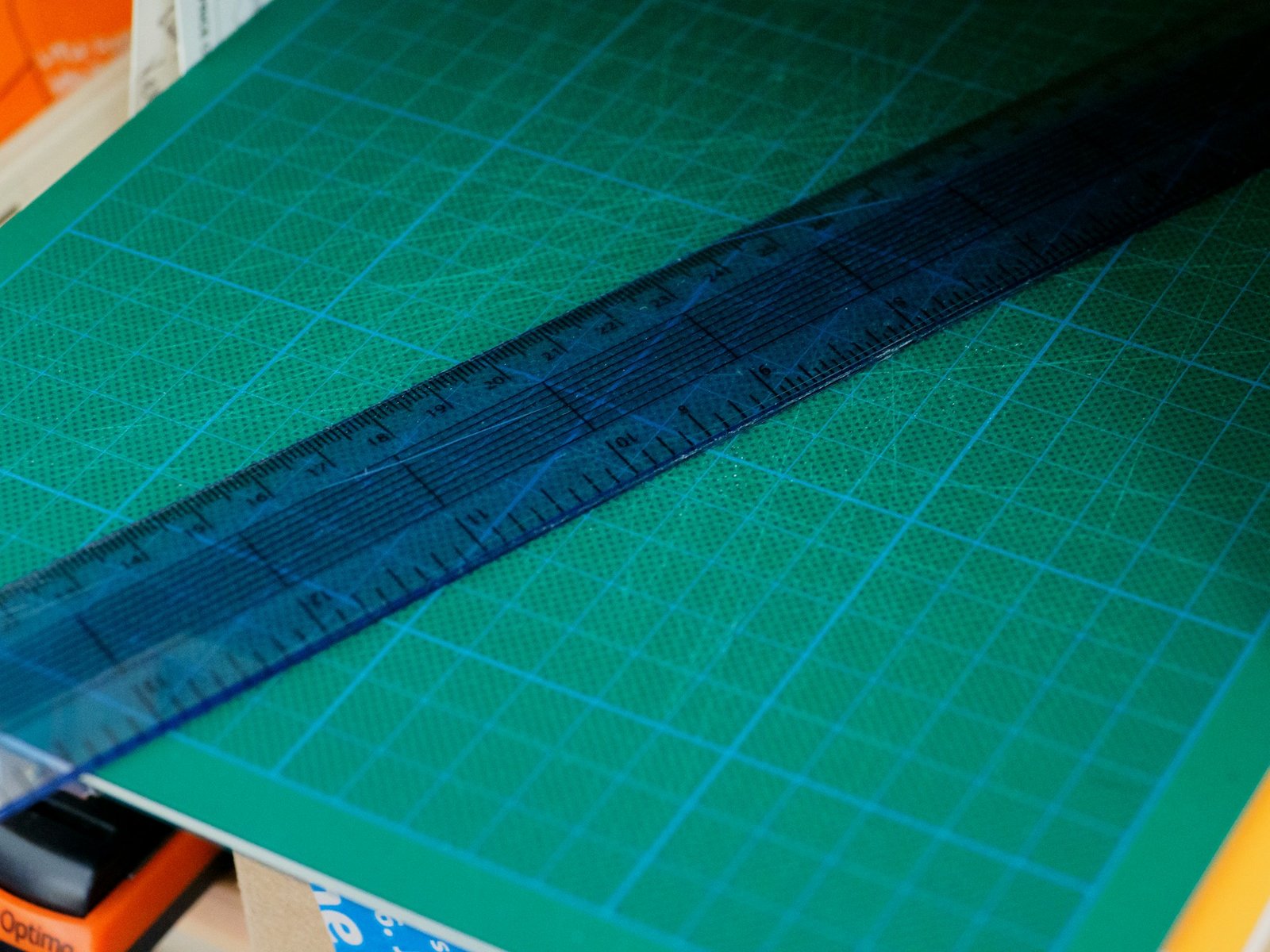
The obvious function is protecting the table. But the grid lines are what make it genuinely useful — you can square up layouts, check alignment, and line elements up without measuring from scratch every time. It’s a reference tool as much as a protective surface, and once it’s there you use it as a reference constantly without really noticing.
Working without one feels fine until you have one. Then it just becomes part of the setup, quietly doing its job on every single project.
Not glamorous, but life changing.
None of these are the purchases that generate any excitement. Nobody’s eyes light up at a paper trimmer the way they do at a new paper collection or a stamp set they’ve been thinking about for weeks.
But these are the tools that determine whether finished projects actually look the way you planned — whether the effort and time you put in shows up in the result. They’re unglamorous, a little dull to shop for, and quietly essential to almost everything.
Get them sooner rather than later. Future you will appreciate it.
